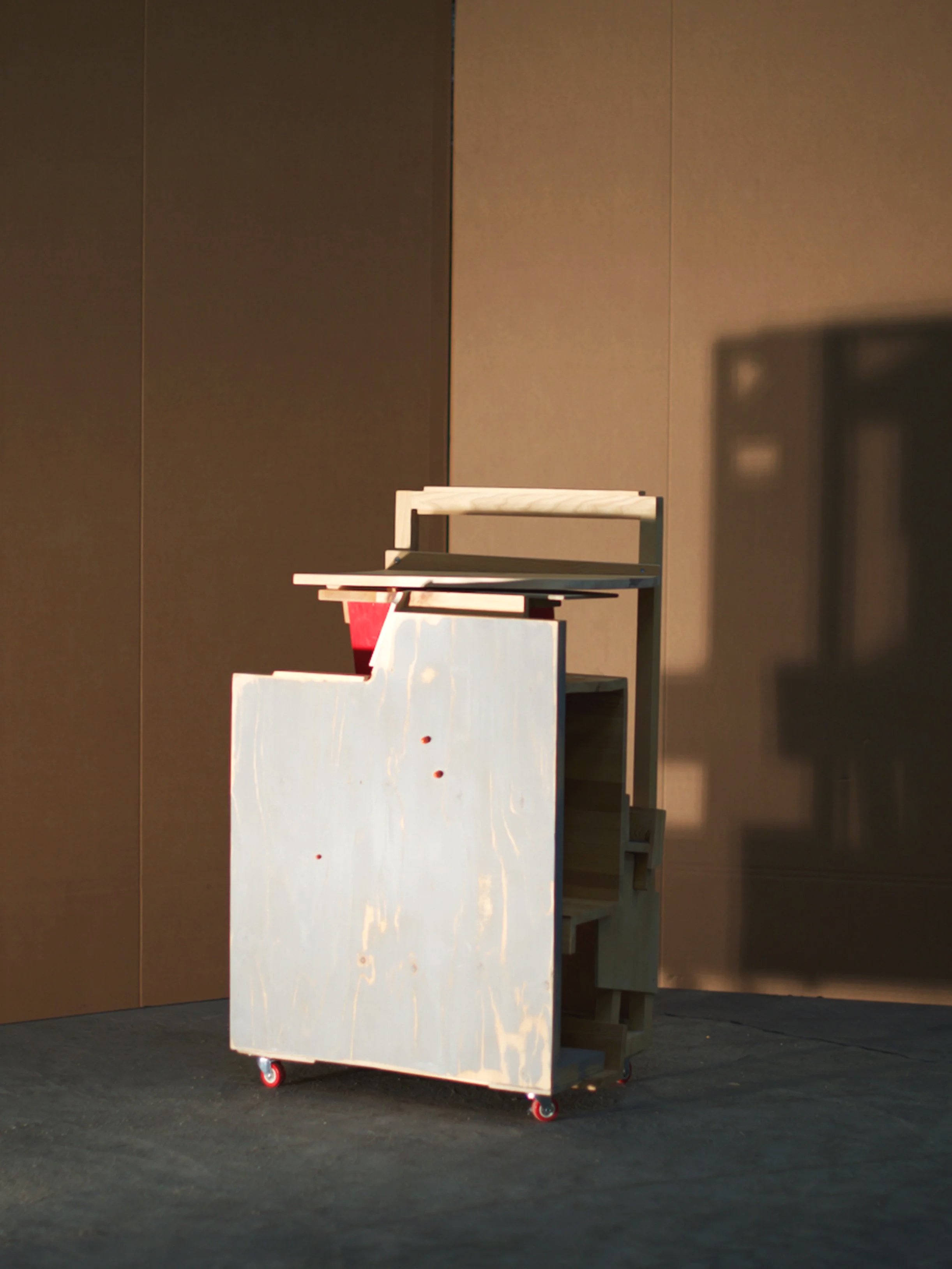
A Cart for Living and for Leaving
- the only furniture you will ever need.
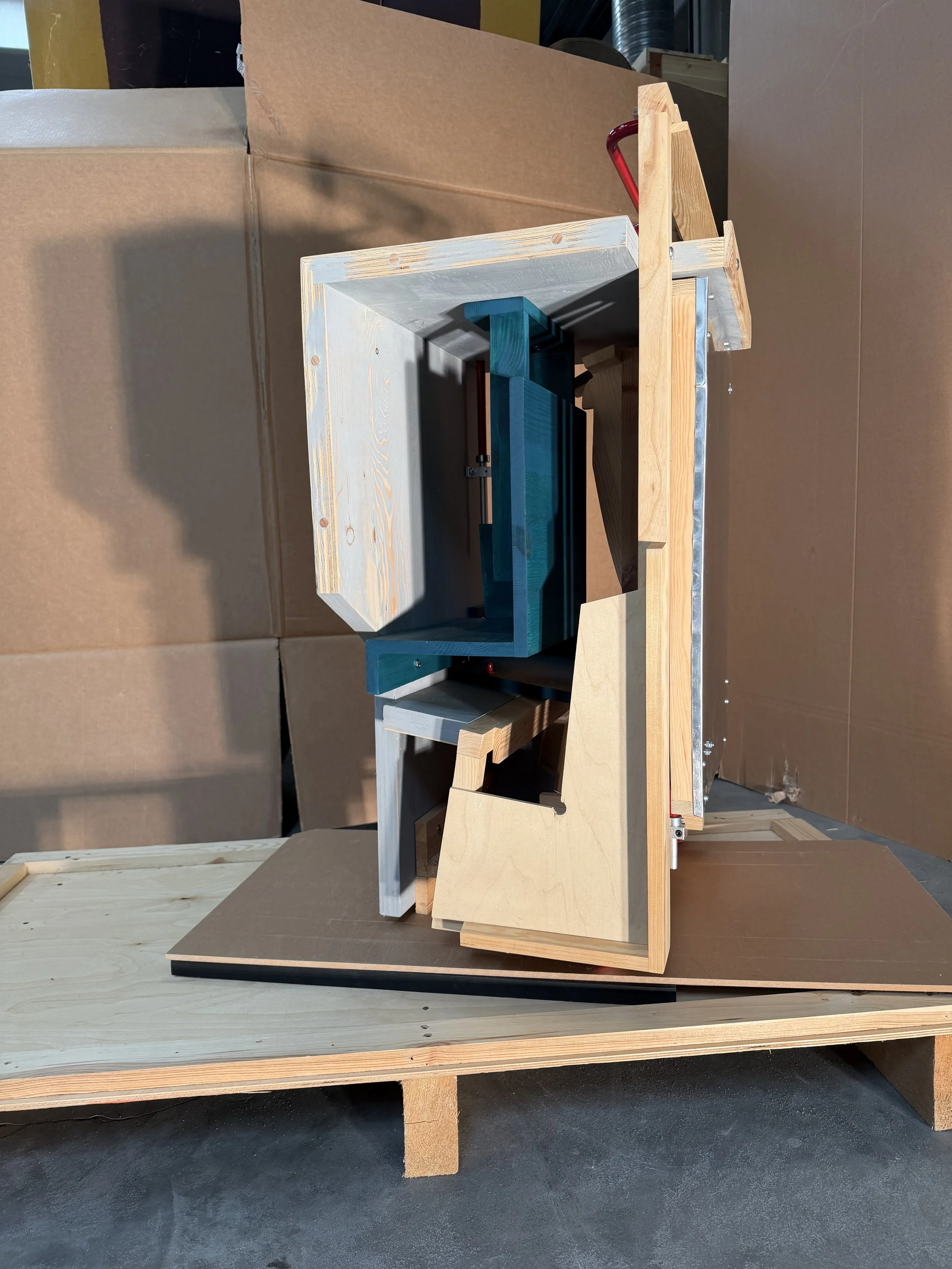
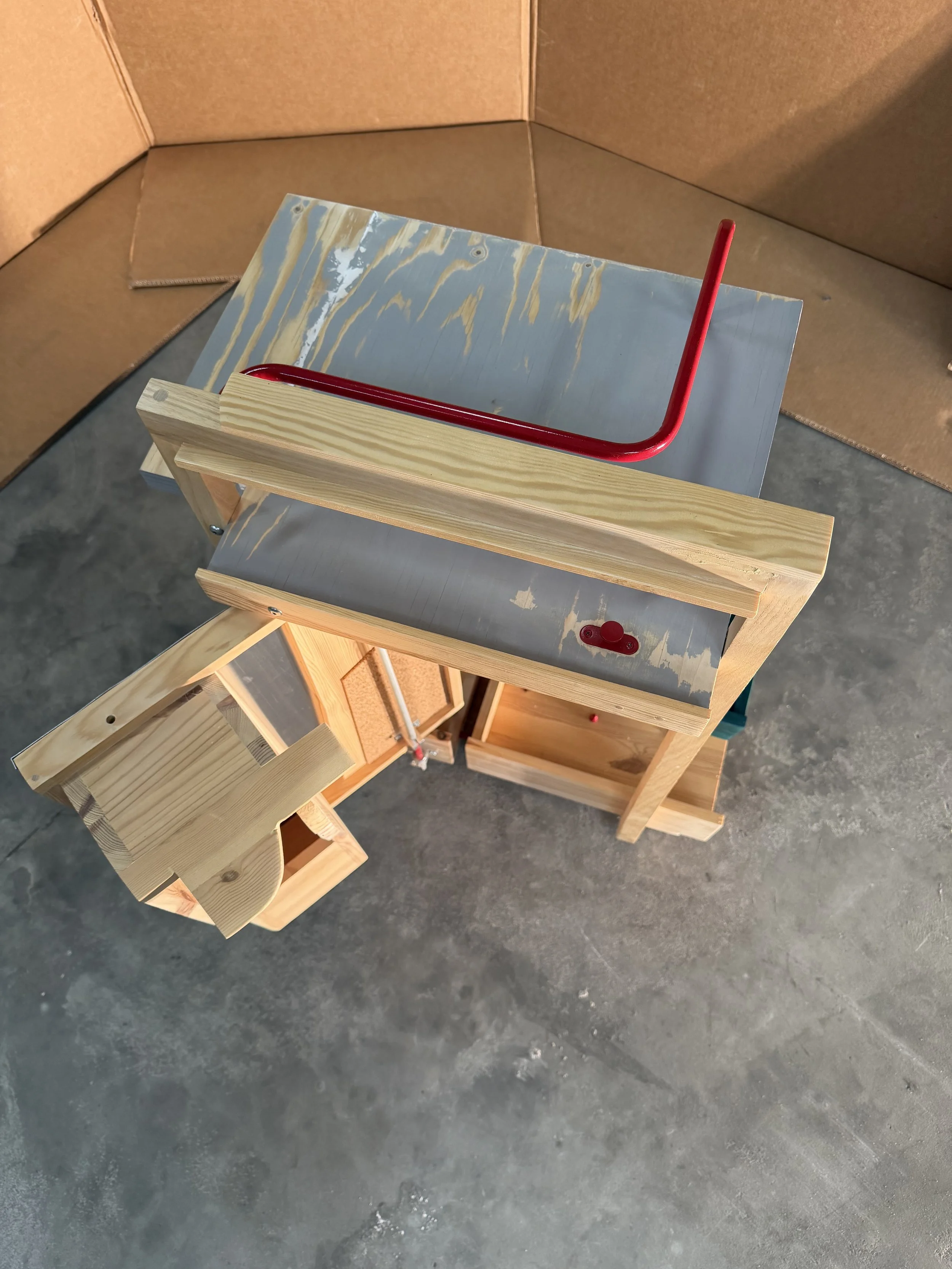
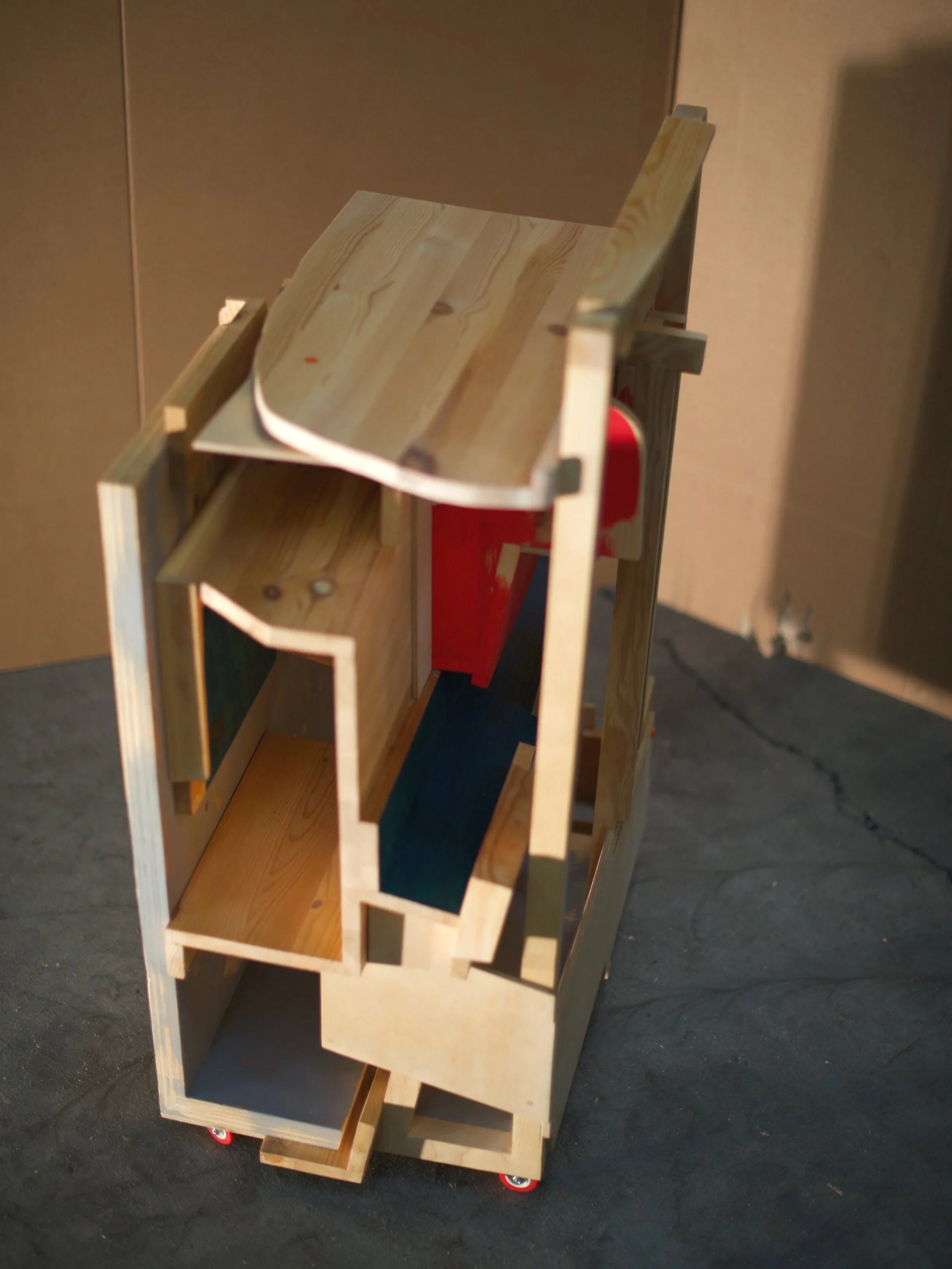
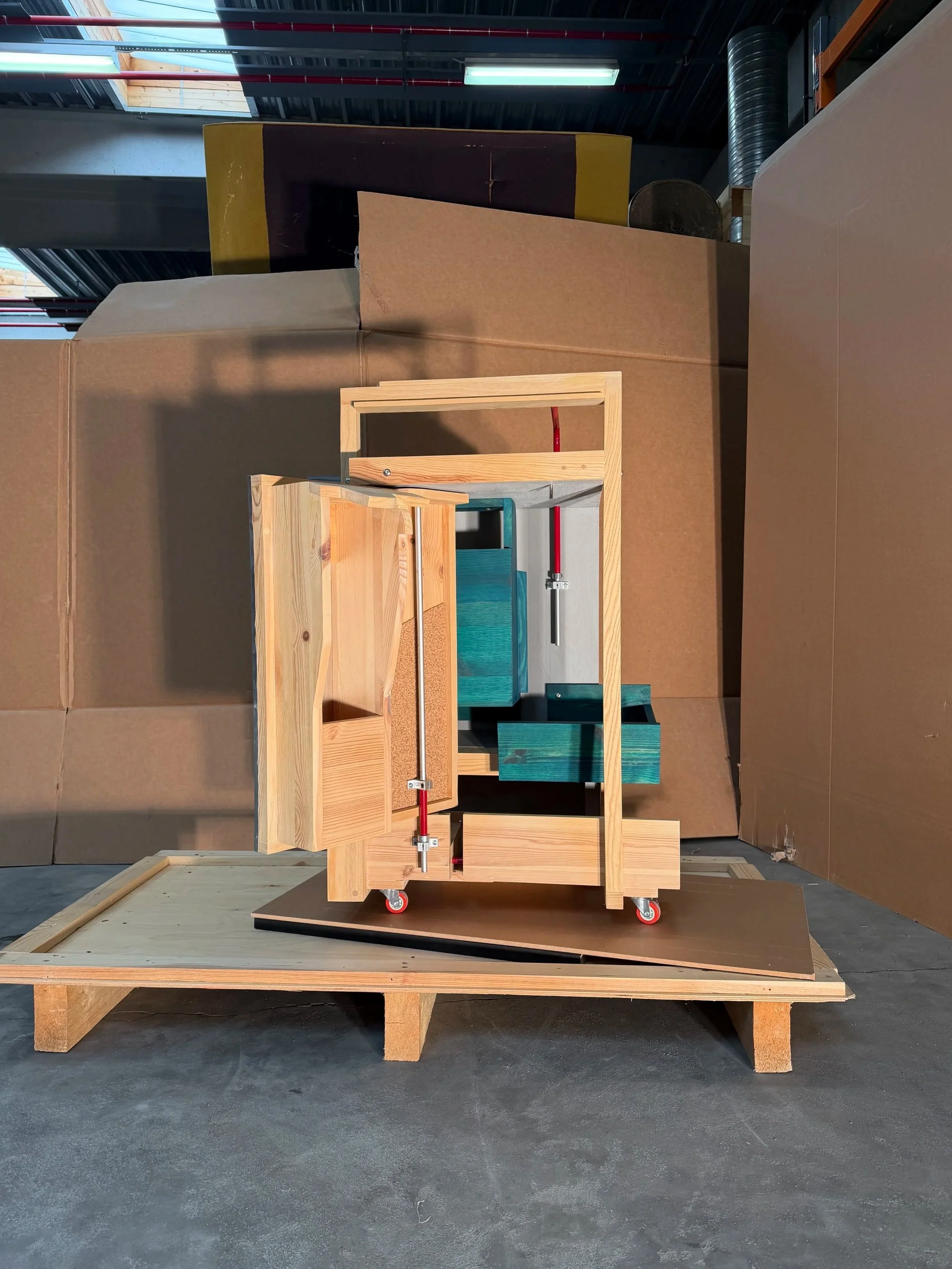
The materials arrive with their own history. Salvaged ash and pine, reclaimed cork and aluminum - each piece already lived in, already marked. They determine what the cart becomes. Not designed so much as negotiated: between the maker's hand and what the materials allow, between intention and accident, between this life and the ones before it.
Built in fragments - ash against pine, cork against aluminum, painted against raw - it holds together the way a life does: imperfectly, stubbornly, with visible repairs. Each material a different decision, a different season, a different hand.
It begins as a pushchair. It ends as a walker. In between, it is a surface for working or eating, a drawer for keeping, a door for closing on what no longer fits. A rolling altar for the rituals of the everyday. It moves with you. It takes your marks. It remembers what you might not. The scars are not failures of making. They are the work of living.
In a moment when design must reckon with its own complicity - in extraction, in accumulation, in the endless production of things - this cart proposes a different contract: one object, cared for, carried forward. Not a monument to ownership but a companion through it. Mobile enough to follow you across a life. Humble enough to be left behind.
After Emanuele Coccia: home is where objects become subjects. This is that subject. Patchworked. Scarred. Sufficient. Yours.
Signed. Handmade. No two identical - the salvaged materials make repetition impossible. Two are made.
Year: 2025
Materials: wood, aluminum, steel and cork - all salvaged materials
Dimensions HxWxD: 100×40×60